What if one of the most common forms of litter could be transformed into something that inspires global environmental action?
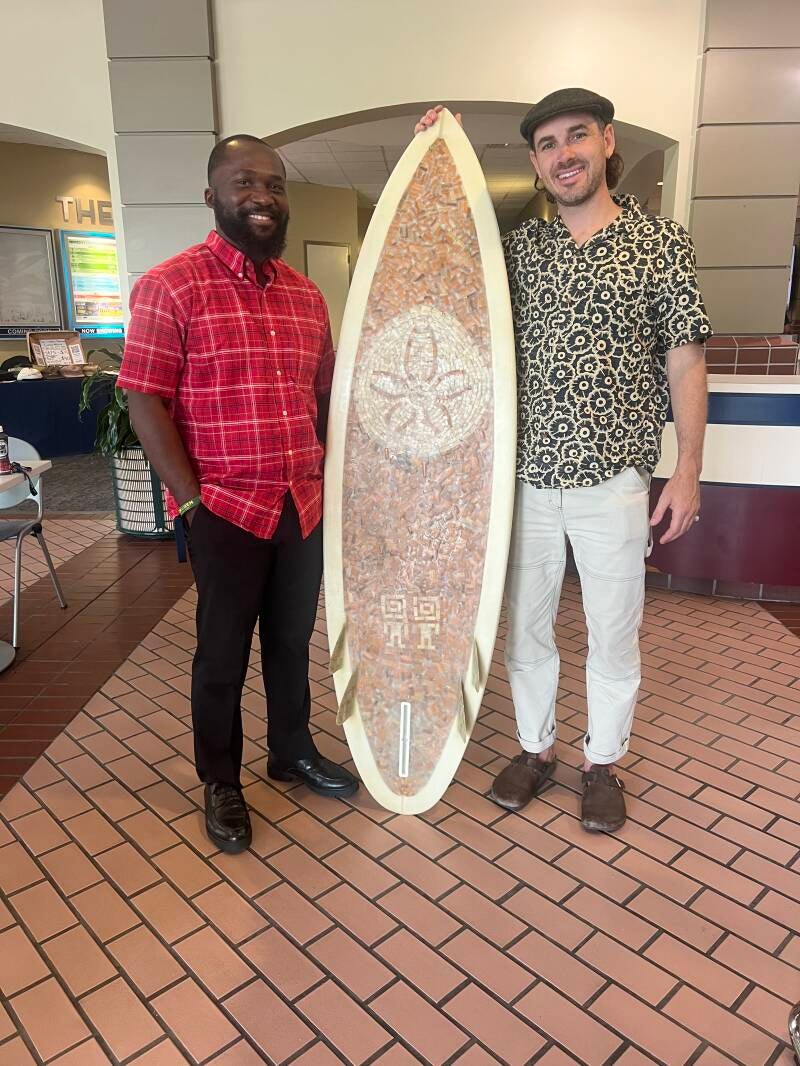
As part of Southern Sustainability Week at Georgia Southern University, I had the opportunity to attend a powerful film screening and Q&A discussion on The Cigarette Surfboard. This 2024 documentary challenges how we think about pollution, responsibility, and innovation.
Learn more about the project: https://www.thecigarettesurfboard.com
And honestly, it left me thinking differently.
From Pollution to Purpose
At the center of the story is surfer Taylor Lane, alongside filmmaker Ben Judkins, who set out to do something unconventional:
Build a fully functional surfboard… using 10,000 discarded cigarette butts.
What started as an upcycling contest quickly evolved into something much bigger, a global conversation about ocean pollution and accountability.
The Problem We Often Overlook
Cigarette butts are one of the most littered items in the world.
Small. Easy to ignore. But incredibly harmful.
They contain plastic fibers and toxic chemicals that persist in the environment, often ending up in waterways and oceans.
This film doesn’t just highlight the scale of the issue, it forces us to confront how normalized this type of pollution has become.
Innovation Meets Activism
What made this story stand out wasn’t just creativity, it was purpose-driven innovation.
The surfboard became more than a symbol. It became a tool for advocacy:
- Raising awareness about cigarette waste as a form of plastic pollution
- Challenging industries, especially “Big Tobacco”, to take responsibility
- Engaging communities in conversations about sustainability and waste
Through interviews with surfers, scientists, and activists, the film shows that environmental solutions don’t always come from large systems—they can start with bold, unconventional ideas.
Why This Matters
As students and professionals in environmental and public health spaces, we often focus on large-scale systems policy, infrastructure, and regulation.
But this experience was a reminder that:
Impact can also begin with creativity, storytelling, and individual action.
Sometimes, the most powerful messages come from making the invisible visible.
Voices from the Field Reflection
Walking away from this screening, one thought stayed with me:
We don’t just need better waste management systems, we need to rethink how we engage people with environmental issues.
Because when people can see the problem… they’re more likely to act on it.
And sometimes, all it takes is one unconventional idea, like a surfboard made of cigarette waste to start that conversation.

Add comment
Comments